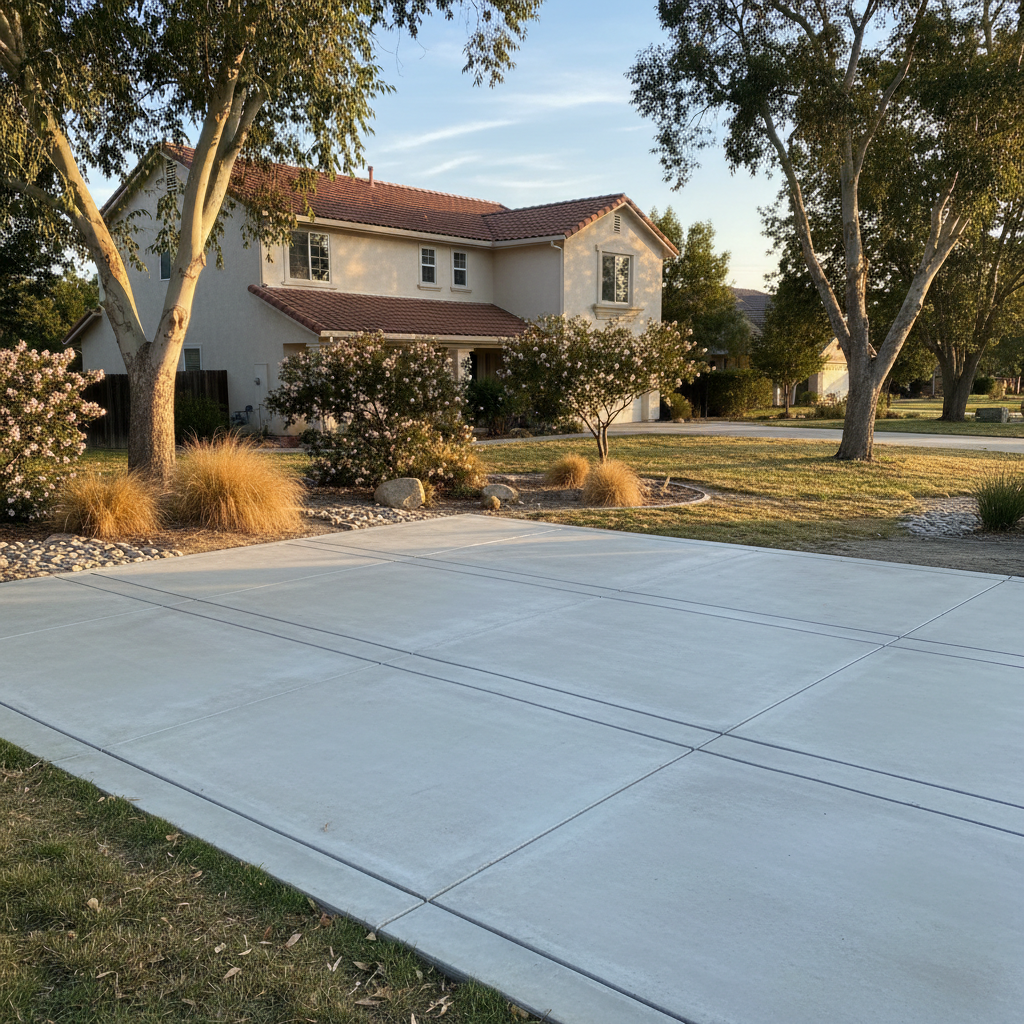
So, you're thinking about that new patio, maybe a wider driveway, or even just a nice, clean walkway around the side of your house? That's great! Concrete flatwork really can give your home a lift, both in looks and how you use it. But before you start dialing up contractors or sketching out plans, let me share some common missteps I see folks in Manteca make. Steering clear of these can save you a whole lot of headaches and money down the line.
Cutting Corners on Site Prep
This is probably the biggest one, honestly. People glance at a quote, see "site prep," and think, "Can't we just pour over what's already there?" Or they try to tackle it themselves without really knowing the ropes. Here's the thing: concrete is only as good as what's underneath it. If your sub-base isn't properly graded, compacted, and stable, you're just asking for trouble. We're talking cracks, uneven settling, and drainage nightmares.
Just consider Manteca's soil, particularly in some of those older neighborhoods near Highway 99 — it can be pretty expansive. It swells when it gets wet and shrinks when it dries out. If you don't get the ground ready the right way, that movement will transfer straight up to your brand-new concrete. A good contractor will spend the necessary time on proper excavation, lay down a solid aggregate base, and compact it using the correct equipment. Don't let anyone tell you this step is optional. It's the foundation, literally.
Forgetting About Drainage
Another huge one. You get this beautiful new patio, then the first big rainstorm hits, and suddenly you've got a pond right next to your back door. Or, even worse, water is pooling up against your house's foundation. It's not just about getting the water off the concrete; it's about getting it away from your home.
When we're planning a concrete pour, we're always thinking about the slope. Even a slight pitch, usually around 1/8 to 1/4 inch per foot, is absolutely critical. This makes sure water runs off naturally. Sometimes, you might even need a trench drain or a specific grading plan to guide water to a safe spot, like a planter bed or the street. Don't just assume everything will be fine. Ask your contractor how they plan to handle drainage. If they can't give you a clear answer, well, that's a red flag.
Only Looking at the Lowest Bid
I totally get it; everyone wants a good deal. But when it comes to concrete, the cheapest option is almost never the best one. I've seen countless homeowners kick themselves for going with the lowest bid because the work turned out shoddy, they used cheap materials, or the crew skipped crucial steps like site prep or proper curing.
A low bid often means a contractor is either desperate for work, inexperienced, or planning to rush the job. You're putting a permanent structure on your property, after all. You want it done right the first time. Get multiple quotes, yes, but compare them on overall value, not just the price tag. Ask about their experience, their process, and what kind of warranty they offer. Alpha Concrete, for instance, stands behind its work because we know what goes into a quality job.
Not Really Understanding the Scope of Work
This is a surefire way to end up with misunderstandings and frustration. Before any work even starts, you need to have a super clear idea of what's included in the price. What kind of finish will it be? Broom finish? Stamped? What about expansion joints? Will they remove the old concrete? Haul away the debris? How thick will the concrete be? What PSI strength are they pouring?
Get everything in writing. A detailed contract protects both you and the contractor. If it's not written down, just assume it's not included. Don't be shy about asking questions until you fully understand every single line item. It's your house, your money, and your peace of mind.
Ignoring the Curing Process
Once the concrete is poured, the job isn't actually over. Proper curing is absolutely essential for the concrete to reach its full strength and durability. This usually means keeping the concrete moist for several days, either by spraying it with water, covering it with plastic, or using a special curing compound.
If you or your contractor don't pay attention to curing, especially during Manteca's hot summer months, the concrete can dry out way too quickly. This leads to surface cracking, dusting, and a weaker slab overall. A good contractor will explain the curing process and what you need to do (or what they'll do) to make sure it cures properly. Don't walk on it too soon, don't drive on it too soon. Patience here pays off big time.
Not Checking References or Licenses
This one seems obvious, but you'd be surprised how many people skip this step. Anyone can claim they're a concrete contractor. A legitimate contractor will hold a C-8 concrete license from the CSLB (Contractors State License Board). You can easily look it up online to confirm it's active and they don't have any disciplinary actions against them.
Ask for references, and then actually call them. Ask to see examples of their work, too. A contractor who's proud of what they do will be more than happy to show it off. It's a simple step, but it can save you from hiring someone who isn't qualified or, even worse, a scammer.
Hiring for concrete flatwork isn't rocket science, but there are definitely right ways and wrong ways to go about it. Do your homework, ask the right questions, and don't cut corners on the important stuff. You'll end up with a concrete project that lasts and looks great for years to come.