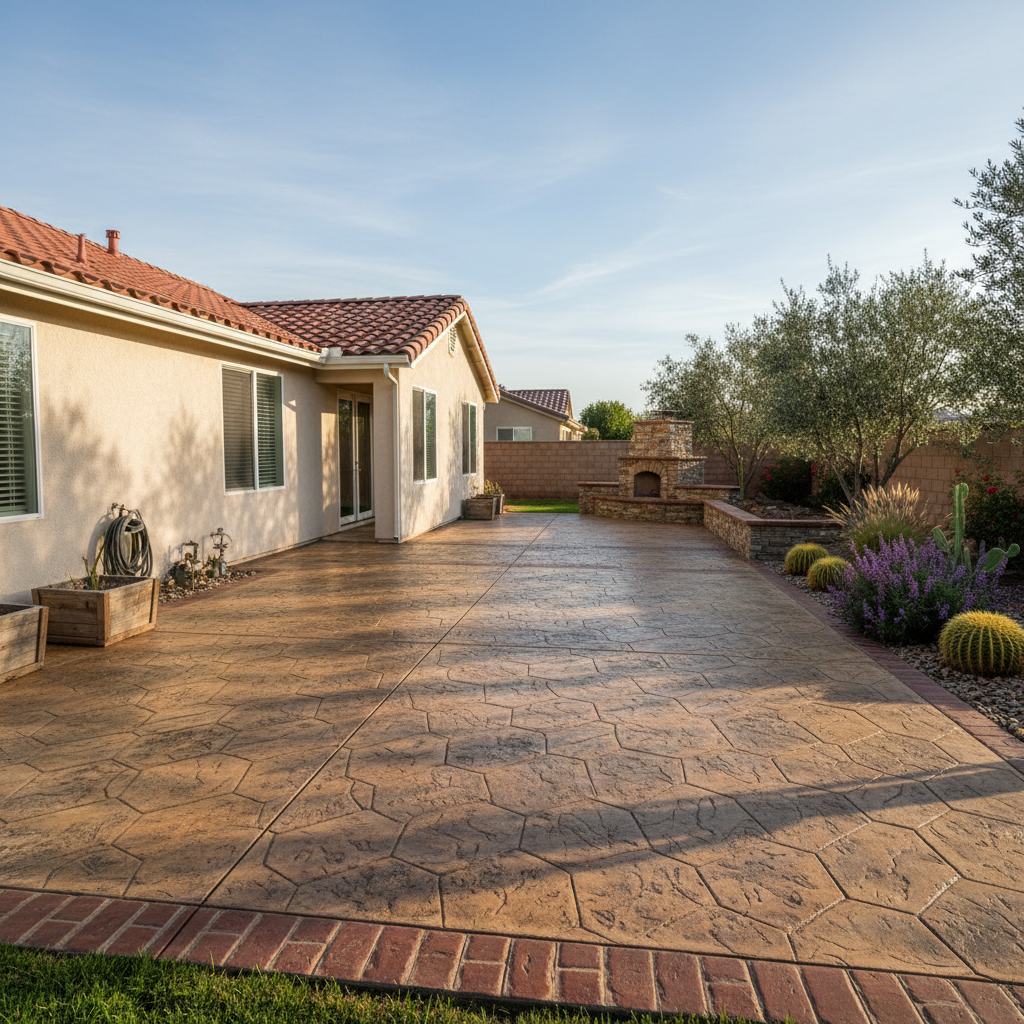
So, you're probably wondering when the best time is to get that gorgeous stamped concrete patio or driveway installed, right? That's a smart question, especially here in Manteca, because our local climate really dictates how well your project turns out and how long it lasts. I've seen countless concrete jobs over the years, and believe me, timing isn't just a suggestion—it's absolutely critical.
When to Schedule Your Stamped Concrete Project
Here in the Central Valley, we know heat. Those scorching summer days, often hitting triple digits, are just not ideal for pouring and stamping concrete. Concrete, you see, cures best when it doesn't dry out too fast. When it's 105 degrees outside, the water in the mix evaporates way too quickly. This can lead to cracking, a weaker surface, and honestly, it makes it much harder to get that perfect stamp pattern.
That's why I always tell folks to aim for the cooler months. Spring (March to May) and Fall (September to November) are truly ideal. Temperatures are usually pretty mild then, often in the 60s and 70s, maybe even low 80s. This gives the concrete plenty of time to cure properly. It lets us work the surface to get those intricate patterns and colors just right, without battling against rapid drying. The result? A stronger, more durable, and much better-looking finish.
Winter can work too, but you've really got to watch out for frost. If temperatures dip below freezing within 72 hours of pouring, it can seriously mess with the concrete's strength. We're pretty lucky in Manteca that hard freezes aren't an everyday thing, but it's definitely something we monitor closely. We'll often use special additives or blankets to protect the concrete if we're working in colder weather. This is especially true if you live in one of those older neighborhoods, like Woodward Park, where the shade from mature trees can keep things a bit chillier.
Weather Conditions That Affect the Work
Beyond just temperature, a few other weather factors come into play:
- Direct Sunlight: Even on a 75-degree day, direct, intense sunlight can make the surface dry out too fast. We'll often use shade cloths or just adjust how quickly we're working to compensate.
- Wind: A strong breeze, especially a dry one, can also speed up surface drying. Again, it's all about managing that moisture balance.
- Rain: This one's a no-brainer, right? You absolutely cannot pour concrete in the rain. It dilutes the mix, washes away cement, and completely ruins the finish. If rain is in the forecast, we'll reschedule. It's always better to wait a few days than to end up with a compromised product.
- Humidity: High humidity can slow down the drying process. That's not necessarily a bad thing for curing, but it does mean we need to adjust our timing for stamping and finishing.
As your contractor, it's my job to keep an eye on these conditions and make the final call. Sometimes, that means pushing a job back a day or two. But it's always for the good of your investment, believe me.
Protecting Your Stamped Concrete Year-Round
Once your beautiful new stamped concrete is in place, you'll want to keep it looking great. It's not a "set-it-and-forget-it" kind of deal, but the maintenance isn't tough either:
- Sealing is Key: We'll apply a high-quality sealer once the concrete has fully cured. This protects against stains, UV damage (which can fade colors), and general wear and tear. You'll want to re-seal every 2-3 years; sometimes more often for high-traffic areas or if it's constantly baking in the sun. Think of it like waxing your car—it just keeps it looking new and protected.
- Clean Regularly: A simple sweep and an occasional rinse with a garden hose is usually all it takes. For tougher spots, a mild detergent and a soft brush will do the trick. Just avoid harsh chemicals or blasting it with a pressure washer, as those can damage the sealer or even the concrete surface itself.
- Watch for Stains: If you spill oil or anything else, clean it up quickly. The sealer helps, but it isn't bulletproof.
- Avoid De-icing Salts: In the rare event of freezing weather, never use rock salt or other de-icing chemicals on your stamped concrete. They can degrade the surface and cause pitting or spalling. Sand is a much safer alternative for traction.
- Heavy Loads: While concrete is strong, try to avoid dragging extremely heavy, sharp objects across it. That can scratch the surface or the sealer.
Taking care of your stamped concrete isn't a huge chore, but it makes a world of difference in its longevity and appearance. We at Alpha Concrete are always happy to give you a quick refresher on care tips after we finish your project. A little bit of effort really does go a long way in keeping your investment looking fantastic for years to come.