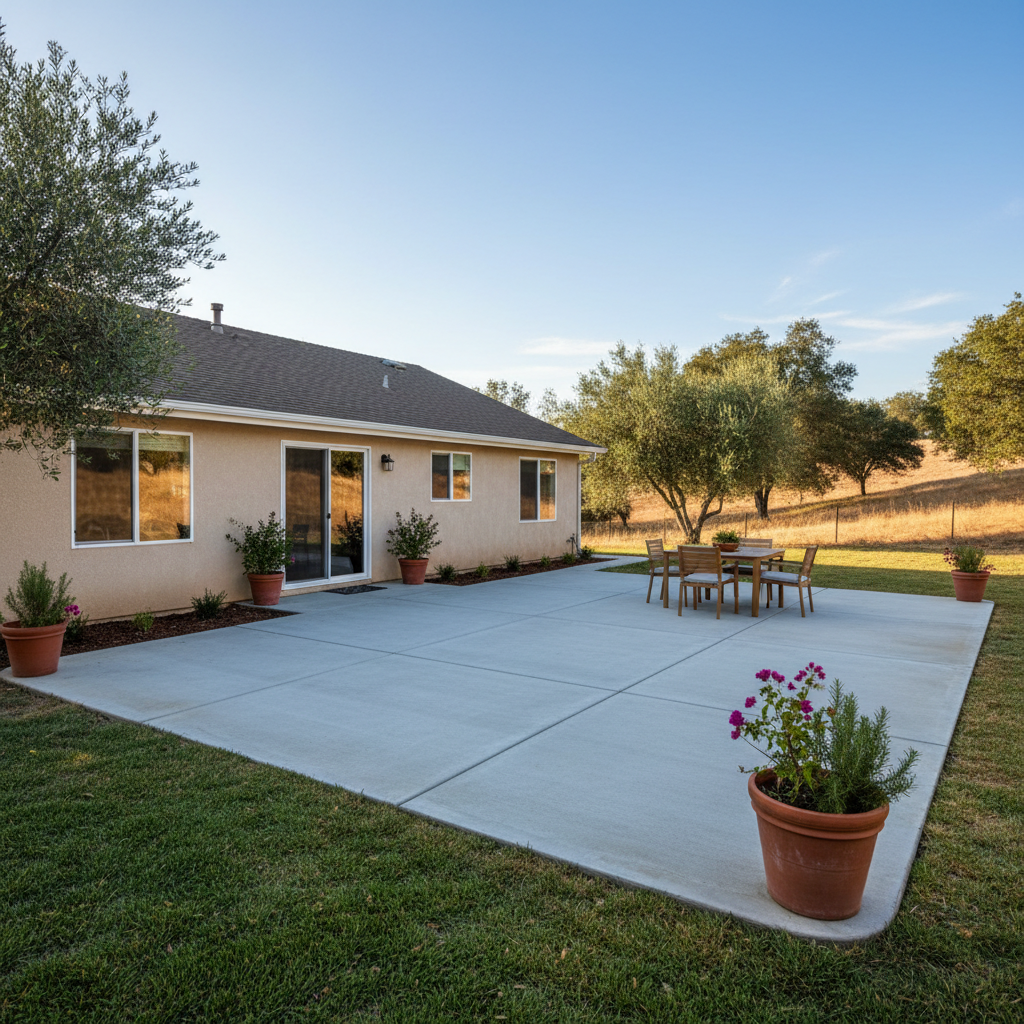
Ever walk out into a backyard here in Manteca during a July heatwave and feel the ground radiate heat straight through your shoes? Backyard projects are a major investment, and planning a new concrete patio takes more than just picking out a nice stamp pattern or a color from a brochure. Over the years, Alpha Concrete has torn out plenty of fresh-looking slabs that failed prematurely simply because corners were cut during the planning or hiring phase.
If you are getting ready to upgrade your outdoor living space, you want a slab that stays level and looks great for 15 to 20 years or more. Here is what you need to watch out for to keep your project on track and avoid major regret.
Skipping the Subgrade Prep
The biggest mistake happens where you cannot even see it once the job is done. Down here in the Central Valley, our soil can be tricky, featuring expansive clay pockets or sandy loam layers that shift with the seasons. If a crew just pours concrete straight over loose dirt without properly grading and compacting an aggregate base, your patio is going to settle. We have seen slabs crack and sink within two years simply because the subgrade was rushed. At Alpha Concrete, we spend serious time compacting that base rock so your patio has a stable foundation that will not give way under heavy patio furniture or a crowded weekend barbecue.
Ignoring Proper Drainage Near the House
Water has to go somewhere when it rains, and you definitely do not want it pooling against your stucco foundation. A poorly planned patio slope can trap water right next to your house, leading to moisture issues and structural headaches down the road. Every single patio needs a precise, subtle slope away from the dwelling. If a contractor tells you drainage does not matter on a backyard flatwork project, show them the door.
Falling for the Lowest Bidder Trap
It is tempting to jump on the cheapest estimate that lands in your inbox, but in the concrete business, a suspiciously low price almost always means something is being left out. Usually, that means thinner concrete, zero wire mesh or rebar reinforcement, or skipping the permits if required. Ask every contractor exactly what thickness they are pouring and how they handle reinforcement. Saving a few hundred dollars upfront is not worth it when your patio cracks into pieces after a single season.
Forgetting About the Central Valley Heat
Timing a pour in our local climate requires actual experience. Pouring a patio on a blistering 100-degree afternoon without adjusting the mix or using evaporation retarders causes the surface to dry out too fast. That leads to ugly plastic shrinkage cracks and a weak top layer that dusts off under your feet. Make sure whoever you hire knows how to manage hydration and curing when the valley sun is beating down. For homes and businesses in Manteca, Alpha Concrete provides Concrete Contractor services.