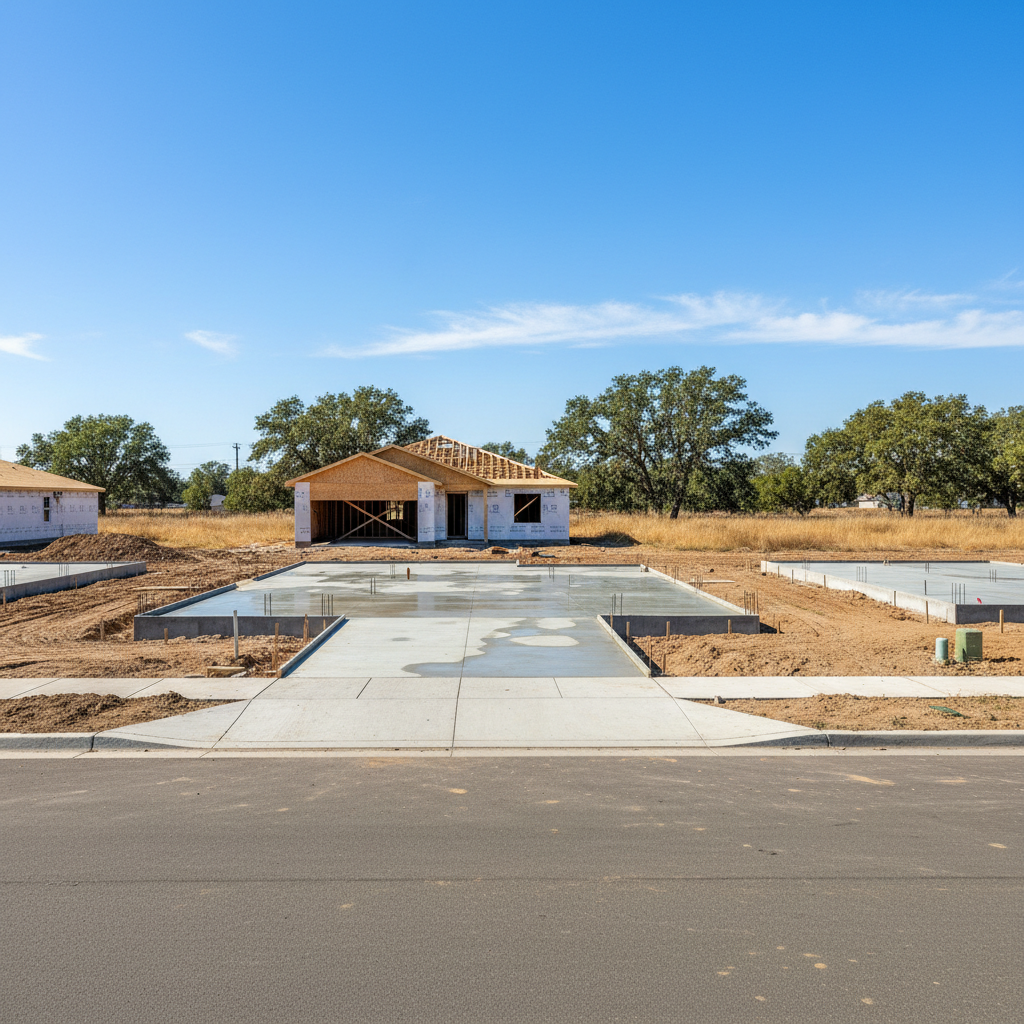
Your home is only as solid as the ground it sits on, and here in the Central Valley, that ground gives foundations a real workout. Whether you are building a new addition out near Woodward Park or replacing an old slab closer to downtown, understanding how local earth interacts with concrete can save you from massive problems down the road. Alpha Concrete has spent years digging into San Joaquin County soil, and it has taught us that cookie-cutter foundation methods do not work around here.
The Reality of Manteca Soil
If you have ever tried to dig a deep hole in your yard during the dry summer months, you know how hard and stubborn the dirt gets. Much of our local terrain features expansive clay and fine sandy loam that shifts dramatically depending on the season. When we get winter rains, the soil absorbs moisture and swells up. When the scorching summer heat sets in, that same dirt dries out, shrinks, and leaves tiny voids underneath. That constant push-and-pull puts immense stress on concrete slabs. Without proper engineering and site prep, this cycle leads to cracked floors, jammed doors, and uneven rooms.
Why Proper Site Prep Matters Most
Pouring a foundation is not just about dumping a truckload of ready-mix into a wooden frame and smoothing it out. The secret to a long-lasting structure happens long before the concrete truck ever rolls up to your property. Alpha Concrete spends a lot of time on subgrade compaction, moisture barriers, and setting the right reinforcement. Skipping these steps to save money today guarantees you will be paying for costly structural repairs tomorrow. When you are dealing with local building codes and seismic requirements in California, precision is important. Every rebar grid and anchor bolt needs to be dialed in perfectly to make sure the entire structure moves as a single, monolithic unit.
Protecting Your Investment for the Long Haul
Once the pour is finished, proper curing is your best friend. The intense Manteca sun can bake moisture out of fresh concrete too fast, leading to surface shrinkage cracks if you are not careful. Alpha Concrete always advises homeowners to keep a close eye on perimeter drainage, too. Directing rainwater away from your foundation keeps hydrostatic pressure from building up against the slab walls during heavy downpours. Doing it right the first time means your home stays level, secure, and ready to weather whatever the Central Valley climate brings.